
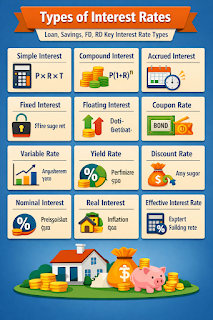

ଆଜିର ଆର୍ଥିକ ଜଗତରେ ସୁଧ (Interest Rate) ହେଉଛି ସବୁଠାରୁ ମୁଖ୍ୟ ଅଂଶ। Savings Account, Loan, FD (Fixed Deposit), RD (Recurring Deposit) କିମ୍ବା Bond – ସମସ୍ତ financial productରେ ସୁଧର ପ୍ରଭାବ ସିଧାସଳଖ ଭାବେ ଗ୍ରାହକଙ୍କ ଲାଭ କିମ୍ବା ଖର୍ଚ୍ଚକୁ ନିର୍ଣ୍ଣୟ କରେ।
ଅନେକ consumer Nominal Rate (ନାମମାତ୍ର ସୁଧ) କୁ ଦେଖି loan କିମ୍ବା deposit product ବାଛନ୍ତି, କିନ୍ତୁ Effective Rate (ପ୍ରଭାବଶୀଳ ସୁଧ) – ଯାହା compounding, fees, charges, inflation ସବୁକୁ ଧ୍ୟାନରେ ରଖେ – ସେହି productର ବାସ୍ତବିକ ଖର୍ଚ୍ଚ କିମ୍ବା returnକୁ ପ୍ରକାଶ କରେ।
ଏହି ଲେଖାରେ, Simple Interest, Compound Interest, Accrued Interest, Fixed, Floating, Coupon, Variable, Yield, Discount, Nominal, Real, Effective Interest Rate – ସମସ୍ତ ପ୍ରକାରକୁ ସହଜ ଭାଷାରେ ବ୍ୟାଖ୍ୟା କରାଯାଇଛି। ପ୍ରତ୍ୟେକ ପ୍ରକାରରେ Loan Account, Savings Account, FD, RD ଉଦାହରଣ ଦିଆଯାଇଛି, ଯାହା consumerଙ୍କୁ ତୁଳନା କରିବାରେ ସହାୟତା କରିବ।
1. Simple Interest (ସାଧାରଣ
ସୁଧହାର)
- ବିବରଣୀ: Principal (ମୂଳଧନ) ଉପରେ fixed rate ରେ ସୁଧ ଗଣନା। ବ୍ୟାଖ୍ୟା: ସାଧାରଣ ସୁଧରେ, ସୁଧ କେବଳ ମୂଳଧନ (Principal) ଉପରେ ଗଣନା ହୁଏ।
- ସୂତ୍ର::
S I =( P × R × T )*100 - ଉଦାହରଣ: ₹10,000
loan, 10% annual rate, 1 year → ₹1,000 ସୁଧ।
(10000 * 10% *1)/100 ₹1,00,000 personal loan at 10% for 2 years → ₹20,000 - Savings
Example: ₹1,00,000 FD with simple interest at 6% for 1 year → ₹6,000
2. Compound Interest (ଚକ୍ରବୃଦ୍ଧି ସୁଧହାର)
- ବିବରଣୀ:Compound
interest ରେ, ପ୍ରତ୍ୟେକ period ପରେ Principal + ସୁଧ ଉପରେ ପୁଣି ସୁଧ ଗଣନା ହୁଏ। ଏହା savings account,
FD, RD ରେ common। - Principal
+ accrued interest ଉପରେ
ସୁଧ। - ସୂତ୍ର::
C I = P × ( 1 + R )^ T − P - ଉଦାହରଣ: ₹10,000 at
10% compounded annually for 2 years → ₹2,100 ସୁଧ। - A
=10,000 (1+10/100)^2 = 12100
Compound Interest (CI) = ₹12,100 – ₹10,000 = ₹2,100
Total amount after 2 years = ₹12,100
- Loan
Example: ₹1,00,000 loan at 10% compounded annually for 2 years →
₹21,000 ସୁଧ। - Savings
Example: Savings account ₹50,000 at 6% compounded quarterly → balance
grows faster than simple interest।

3. Accrued Interest (ସଂଚିତ ସୁଧହାର)
- ବିବରଣୀ: Payment
date ପୂର୍ବରୁ
accumulated interest। - Loan/
bond ରେ payment
date ପୂର୍ବରୁ ଯେତେ interest
accumulate ହୋଇଛି। - Formula:
P × R × T/ 100 × N - ଉଦାହରଣ: Bond coupon
payment every 6 months, but investor sells after 3 months → buyer pays
accrued interest for 3 months। - Loan
Example: EMI due at month‑end, by day 15, accrued interest = half a
month’s interest। - (100000*10%*2)/100*15
4. Floating Interest Rate (ଭାସମାନ ସୁଧହାର)
- ବିବରଣୀ: Benchmark
(Repo rate, LIBOR) ସହିତ
linked। Market
rate change ହେଲେ
loan rate change ହୁଏ। - ଉଦାହରଣ: Home loan =
Repo rate (6.5%) + 1% → 7.5%. If repo rises to 7%, loan = 8%. - Loan
Example: Home loan linked to repo rate. Repo = 6.5%, loan = 7.5%. If
repo rises to 7%, loan = 8%. - Savings
Example: Some savings schemes adjust rates quarterly with RBI changes।
5. Fixed Interest Rate (ନିଶ୍ଚିତ ସୁଧହାର)
- ବିବରଣୀ: Loan period
ସମୟରେ ସୁଧ rate constant। - ଉଦାହରଣ: Personal
loan at 12% fixed for 5 years → EMI stable। - Loan
Example: Personal loan at 12% fixed → EMI constant। - Savings
Example: FD at 7% fixed → guaranteed return।
6. Coupon Rate (କୁପନ୍ ସୁଧହାର)
- ବିବରଣୀ: Bondholder କୁ annual interest
payment percentage। - ଉଦାହରଣ: ₹1,000
bond, 8% coupon → ₹80 per year। - Investment
Example: ₹1,000 bond, 8% coupon → ₹80 yearly।
7. Variable Interest Rate (ପରିବର୍ତ୍ତନଶୀଳ ସୁଧହାର)
- ବିବରଣୀ: Lender
discretion ରେ
change ହୁଏ,
benchmark‑linked ହେବା
ଆବଶ୍ୟକ ନୁହେଁ। - ଉଦାହରଣ: Credit card
interest rising from 18% to 22% depending on RBI policy। - Loan
Example: Credit card interest rising from 18% to 22% depending on the
RBI policy।
8. Yield Rate (ଫଳନ ସୁଧହାର)
- ବିବରଣୀ: Investment
return percentage (interest + capital gain)। - ଉଦାହରଣ: Bond bought
at ₹950, pays ₹100 interest annually → Yield ≈ 10.5%। - ବଣ୍ଡର Current Yield (ବର୍ତ୍ତମାନ ଫଳନ)
ସୂତ୍ର:
📌 ଉଦାହରଣ
- Bond
Face Value: ₹1,000 - Annual
Coupon (Interest): ₹100 - Purchase
Price (Market Price): ₹950
ସେହିପରି, ବଣ୍ଡ 10% coupon rate (₹100
on ₹1,000 face value) ଦେଉଥିବା
ସତ୍ତେ, ଆପଣ ଏହାକୁ ₹950 ରେ
କିଣିଥିବାରୁ, ଆପଣଙ୍କ effective yield
(ବାସ୍ତବିକ ଫଳନ) ଅଧିକ — ପ୍ରାୟ
10.5%।
9. Discount Rate (ଡିସକାଉଣ୍ଟ୍ ସୁଧହାର)
- ବିବରଣୀ: Future cash
flow present value କୁ
convert କରିବା
rate। - ଉଦାହରଣ: ₹1,000 due
after 1 year, discount rate 10% → Present value = ₹909। - Present
Value (PV) = Present Value (PV) =
ଯେଉଁଠାରେ:
- Future
Value (FV) = ₹1,000 - r
(Discount Rate) = 10% = 0.10 - n
(Time in years) = 1 - PV=1000(1+0.10)1=10001.10=₹909.09
- ଆପଣ 1 ବର୍ଷ ପରେ ₹1,000 ପାଇବେ। କିନ୍ତୁ 10% discount
rate ରେ, ବର୍ତ୍ତମାନର ମୂଲ୍ୟ (Present
Value) କେବଳ ₹909। - ଅର୍ଥାତ, ₹909 କୁ ଆଜି invest କଲେ, 10% return rate ରେ 1 ବର୍ଷ ପରେ ₹1,000 ହେବ।
10. Nominal Interest Rate (ନାମମାତ୍ର ସୁଧହାର)
- ବିବରଣୀ: Stated
rate, inflation consider କରାଯାଇନାହିଁ। - ଉଦାହରଣ: Bank FD at
6% nominal interest।
11. Real Interest Rate (ବାସ୍ତବ ସୁଧହାର)
- ବିବରଣୀ: Nominal
rate − Inflation rate।
ନାମମାତ୍ର ସୁଧହାର – ମୁଦ୍ରାସ୍ଫିତି ହାର - ଉଦାହରଣ: FD nominal
6%, inflation 4% → = 2%।
12. Effective Interest Rate (ପ୍ରଭାବଶୀଳ ସୁଧହାର)
- ବିବରଣୀ: Compounding
consider କରି
actual annual rate।
ପ୍ରଭାବଶୀଳ ସୁଧରେ loan ସହିତ ସମ୍ବନ୍ଧିତ ସମସ୍ତ ଅତିରିକ୍ତ ଖର୍ଚ୍ଚ ଓ ଫିees (ଯଥା processing fees,
administrative costs, service charges) ଗୁଡ଼ିକୁ
ଗଣନା କରାଯାଏ। ଏହା loanର ବାସ୍ତବିକ ଖର୍ଚ୍ଚକୁ ପ୍ରତିନିଧିତ୍ୱ କରେ ଓ ଗ୍ରାହକଙ୍କୁ loan ନେବା କିମ୍ବା ନେବାକୁ ନାହିଁ ବୋଲି ନିଷ୍ପତ୍ତି ନେବାରେ ସହାୟତା କରେ।
Nominal Interest Rate (ନାମମାତ୍ର
ସୁଧ) ସହିତ, Effective Interest
Rate (ପ୍ରଭାବଶୀଳ ସୁଧ) ଅତିରିକ୍ତ ଖର୍ଚ୍ଚ,
processing fees ଓ ସମାନ ପ୍ରକାରର ବ୍ୟୟଗୁଡ଼ିକୁ
ମଧ୍ୟ ଧ୍ୟାନରେ ରଖେ।
- ସରଳ କଥାରେ, Nominal Rate
କେବଳ advertised
interest rate, କିନ୍ତୁ
Effective Rate loanର
ସମଗ୍ର ଖର୍ଚ୍ଚ (interest +
fees + charges) କୁ
ଦେଖାଏ। - Formula:
E I R = ( 1 + r/ n )^ n − 1 - ଉଦାହରଣ:
- ଧରନ୍ତୁ ଆପଣଙ୍କ ପାଖରେ ₹2,000 ର loan ଅଛି, ଯାହାର ବାର୍ଷିକ ସୁଧ 6%। ଏହି loanର ଦୁଇଟି version ଦିଆଯାଇଛି:
- 6%
Annual – ଅର୍ଥାତ୍,
ପ୍ରତି ବର୍ଷର ଶେଷରେ ସୁଧ ଗଣନା କରି loan amount ସହିତ ଯୋଡ଼ାଯାଏ। - 6%
Compounded Biannually ଅର୍ଥାତ୍,
ପ୍ରତି 6 ମାସରେ accrued interest
(ସଂଚିତ ସୁଧ) ଗଣନା କରି loan amount ସହିତ ଯୋଡ଼ାଯାଏ। - କେସ 1: ବାର୍ଷିକ ସୁଧ (Annual Compounding
– ବର୍ଷକୁ 1ଥର)
- Loan
Principal (ମୂଳଧନ)
= ₹2,000 - Nominal
Annual Rate (ନାମମାତ୍ର
ବାର୍ଷିକ ସୁଧ) = 6% = 0.06 - Compounding
Frequency (ଗଣନା
ସଂଖ୍ୟା) =
1
ସୂତ୍ର: EIR=(
ବାର୍ଷିକ
compounding ରେ
Effective Rate = 6%।
କେସ 2: ଅର୍ଧବାର୍ଷିକ ସୁଧ (Biannual
Compounding – 6 ମାସରେ
1ଥର)
- Loan
Principal = ₹2,000 - Nominal
Annual Rate = 6% = 0.06 - Compounding
Frequency = 2
ସୂତ୍ର:
Formula:
ଅର୍ଧବାର୍ଷିକ
compounding ରେ
Effective Rate ≈ 6.09%।
ସରଳ
କଥାରେ, ସୁଧକୁ ବର୍ଷକୁ 1ଥର ଗଣନା କରିଲେ ଖର୍ଚ୍ଚ କମ୍, କିନ୍ତୁ 6 ମାସକୁ 1ଥର କିମ୍ବା ମାସକୁ 1ଥର compounding କଲେ loanର effective cost ବଢ଼ିଯାଏ, savings account କିମ୍ବା FD/RDର return ମଧ୍ୟ ବଢ଼ିଥାଏ।
ଯଦି ଆମେ ସଂଚୟ କ୍ଷେତ୍ରରେ ଲାଗୁ କରି ଦେଖିବା
- ଧରନ୍ତୁ ଆପଣଙ୍କ ପାଖରେ ₹2,000 savings
balance ଅଛି, ବାର୍ଷିକ ସୁଧ 6%।
- 6%
Annual Compounding – ବର୍ଷକୁ
1ଥର interest add
ହେବ।
- 6%
Biannual Compounding – ପ୍ରତି
6 ମାସରେ interest
add ହେବ।
- Annual
Compounding → Return = ₹ 2120 – ₹ 2000 = ₹120 (6%)। - Biannual
Compounding → Return ₹ 2121.80 – ₹ 2000 ≈ ₹121.80 (6.09%)। - Compounding
frequency ବଢ଼ିଲେ,
Savings Accountର
return ବଢ଼ିଯାଏ।
Loanରେ
compounding frequency ବଢ଼ିଲେ
borrowerଙ୍କ
cost ବଢ଼େ,
Savings/FD/RDରେ
compounding frequency ବଢ଼ିଲେ
depositorଙ୍କ
return ବଢ଼େ।
Leave a Reply